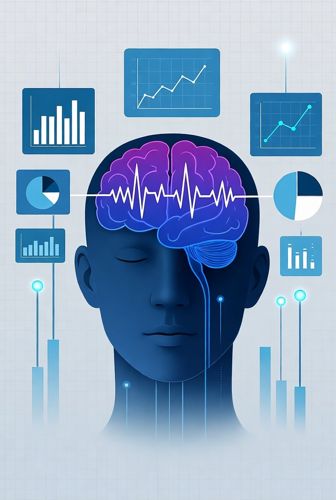
Smarter AI
(As highlighted in our electrode strategies, superior signal fidelity forms the bedrock for advancing AI deeper into the pipeline.)
Yet, our ambitions extend further: We’re engineering machine learning (ML) and software architectures grounded in enhanced physical precision, capable of pinpointing the origins of electrical activity within brain tissue at resolutions of at least 0.5 mm. Attaining such acuity may necessitate high-resolution MRI scans—an added layer of investment, though one we deem indispensable.
Beyond merely mapping the beta and gamma waves long linked to pre-movement intentions, we aim to broaden the entire frequency landscape. This includes heightened sensitivity near the mains power supply frequency, extending down to the faintest extremes of conventional EEG ranges. We recognize potent low-frequency oscillations emerging up to two seconds prior to action, and we’re dedicated to exploring their roles—not just in refining localization, but in forging more robust ML frameworks. Such insights could unlock the exhilarating domain of intent-driven language decoding.
AI-Assisted BCI Art & EEG Innovation
We are pioneering the frontier of brain-computer interfaces (BCI) to unlock new creative and clinical possibilities. Our mission: Enable intuitive painting in Krita with brainwaves, develop EEG-driven language intention and speech generation, and design next-generation EEG hardware with the help of our global community. We invite you to collaborate, donate, and support these breakthroughs in neurotechnology.
AI-Assisted BCI for Creative Painting
Imagine painting vivid digital art with only your thoughts. We are developing an AI-augmented BCI platform that interprets brainwave (EEG) patterns, allowing users to create and manipulate art in Krita hands-free. Our approach combines deep learning, signal processing, and adaptive user interfaces to make creative expression accessible to all, including individuals with limited motor function.
- Advanced deep learning models decode creative intent from real-time EEG signals.
- Continuous adaptation for user-specific brainwave patterns, increasing accuracy over time.
- Integrates seamlessly with Krita, enabling brush selection, color changes, and gesture-based painting—all by thought.
- Accessible design for artists with disabilities or limited mobility.
EEG-Based Language Intention & Speech Interface
Beyond art, our next goal is an EEG-powered system for detecting language intention and generating speech. This tool will empower users to communicate complex ideas and needs directly from their neural signals, with applications in assistive technology, clinical care, and research. We are seeking research and clinical partners to help validate and deploy this innovative communication platform.
- Translates neural signals into words and phrases through machine learning.
- Potential for restoring communication in patients with severe paralysis or speech impairment.
- Enables hands-free, voice-free digital interaction and communication.
- Collaborative research opportunities for clinical validation and deployment.